After all my years of teaching, I can tell you with absolute certainty that the most powerful teaching tool I have isn’t a sight-word flashcard, a leveled reader, or even my beloved morning meeting basket. It’s the door that leads outside.
I know, I know — when the math block is running long, when the writing samples are due Friday, and when it’s twenty-eight degrees with a wind chill, that door can feel like the very last priority. But friend, if there’s one piece of hard-won wisdom I want to pass along to fellow PreK–3rd grade teachers, it’s this: outdoor play isn’t a break from learning. It is some of the most important learning your students will do all day. The research has caught up to what we’ve always sensed in our bones, and it’s time we use that research to advocate fiercely for our kids.
The Brain Science Says So (And So Does Your Gut)
Let’s start with the part that gets curriculum directors to listen: the cognitive evidence. The Centers for Disease Control and Prevention is unambiguous that recess improves memory, attention, and concentration, helps students stay on task, and reduces disruptive behavior in the classroom. That’s not a wellness opinion — that’s the CDC. A growing body of work in Frontiers in Psychology has shown that classroom-based physical activity breaks measurably enhance children’s attention, and the systematic review on educational outcomes of recess in elementary school confirms that giving up recess to “make up time” almost never improves achievement and frequently hurts behavior. Beyond raw movement, time in green space appears to have its own restorative effect — researchers Faber Taylor and Kuo have repeatedly found that time in natural settings reduces ADHD symptoms and supports concentration in ways that indoor breaks simply do not.
Bodies Built to Move
Our early primary kids are not miniature college students. They are growing humans whose bones, muscles, and vestibular systems require movement to develop properly. The NAEYC reminds us that time outside leads to better physical and mental health, improved sleep, and gains across every developmental domain.
When we cut recess to drill phonics, we are quite literally trading our students’ physical health for skills they would acquire faster if they’d had a chance to run, climb, and oxygenate their brains first. I’ve watched many a wiggly six-year-old transform into a focused reader after fifteen minutes of monkey bars — and the research backs that up, showing that unstructured nature play meaningfully supports gross-motor development and overall health.
Friendship, Conflict, and the Real SEL Curriculum
Here’s something we often miss: the playground is where children practice every single skill we put on our SEL standards. Negotiating turns on the swings, recovering from being told “you can’t play,” organizing a complicated game of tag with rules that change every two minutes — this is social-emotional learning in its rawest form. The CDC explicitly lists improvement in social and emotional development, including learning to share and negotiate, as a documented outcome of daily recess.
Researchers studying the playground specifically have noted that it is a uniquely powerful context for foundational social skills precisely because it is unscripted. When we hover and over-direct, we accidentally rob children of the very productive struggle that builds empathy and self-regulation.
Creativity and the Right to a Skinned Knee
I want to make a case here for something that makes a lot of teachers nervous: risk. NAEYC has published thoughtful guidance on eliminating barriers to risk-taking in outdoor play, arguing that when we forbid children from walking up the slide, climbing the low tree, or jumping from the second step, we deprive them of the chance to become “appraisers of risk.”
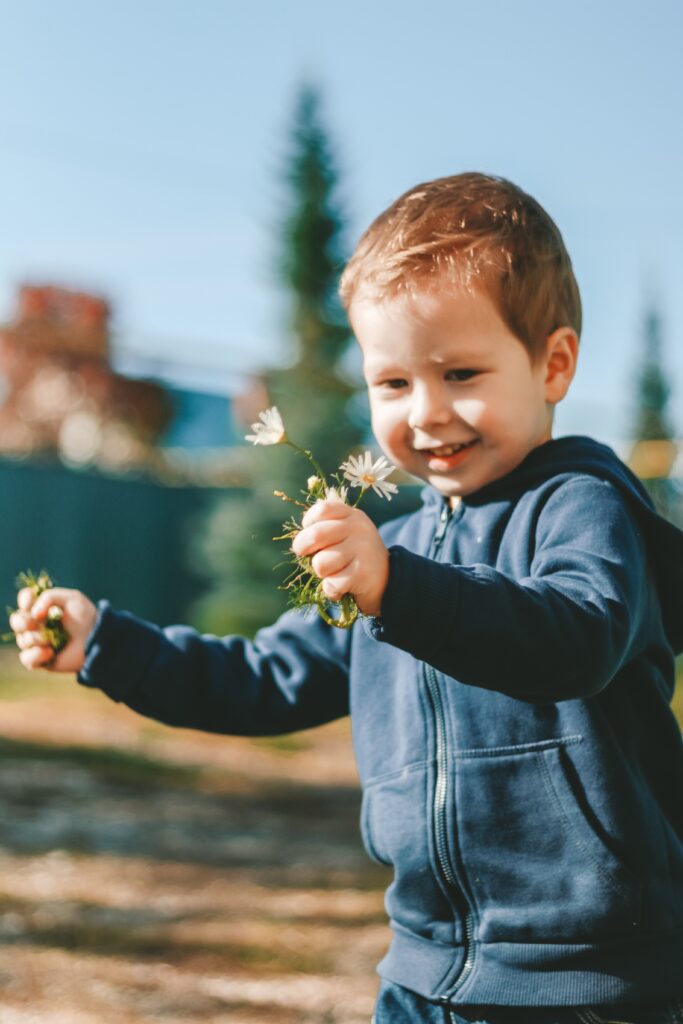
Risk-taking outdoors builds executive function, body awareness, and confidence — capacities that, according to the Encyclopedia on Early Childhood Development, include working memory and inhibitory control. Add in the imaginative explosion that happens when children are handed sticks, mud, and unstructured time, and you have fertile ground for divergent thinking and problem-solving. A pinecone is a phone, a rocket, and a dinosaur egg in the span of three minutes. No worksheet does that.
Making Outdoor Time More Intentional
So how do we make this happen?
The CDC recommends at least twenty minutes of recess daily for K–12 students, and explicitly cautions against using recess as punishment or replacing it with academic make-up time. Print that document and keep a copy in your principal’s mailbox.
Plan for outdoor time the way you plan for literacy centers. The NAEYC’s “Tuning Out to Tune In” piece is a wonderful starting point for thinking about how time outside readies children to learn inside. Bring magnifiers, clipboards, sidewalk chalk, watering cans, and field journals. Pre-teach a few “loose parts” stations (pinecones, fabric scraps, plastic gutters, buckets) and rotate them.
And get yourself outside. When the children see you noticing the cloud shapes or asking questions about the ant trail, you become a co-explorer rather than a referee, and the language of inquiry blooms. Finally, build in nature-based learning across content areas: graph the leaves you collected, write small-moment stories about something noticed on the playground, count seed pods, sort by attribute. Outdoor time and academic time are not enemies; they are partners.
The Closing Bell
All of my years in this profession have taught me that we tend to trust the things we can measure on paper. But trust me on this one: the child who comes back inside with rosy cheeks, having just negotiated a complex game of “lava monster” with five friends and noticed a worm doing something interesting, is in a far better state to learn than the child who has been sitting for ninety minutes straight.
Take them out. Take them out in the rain (with rain boots), in the snow (with snow pants), in the gentle drizzle, and in the bright sun. The research, the pediatricians, and our own teaching intuition are all pointing in the same direction. Open the door.